
Spring Woodland Wildflowers in Italy: A Beginner's Identification Checklist
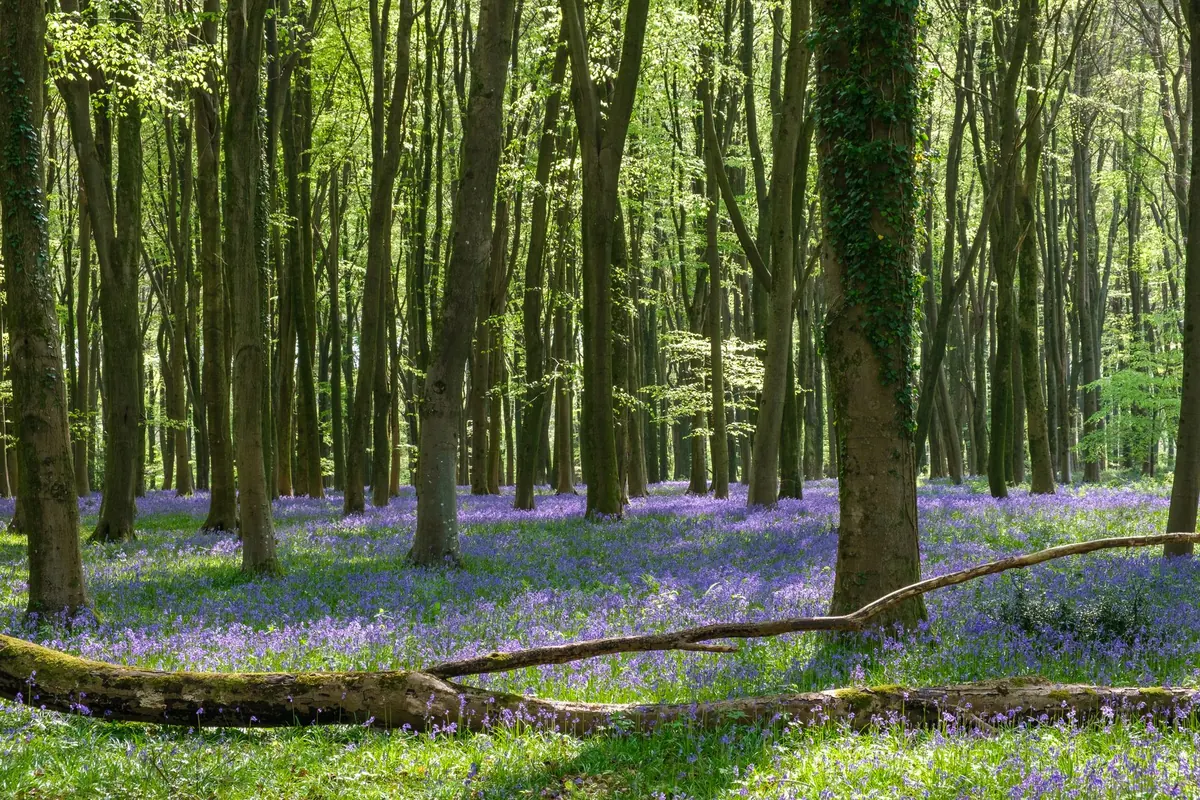
Wood anemones do not announce themselves. One morning the leaf litter on a beech slope is bare and brown; a week later the same ground is scattered with white stars on thread-thin stems. Miss that window and the canopy closes, the light drops, and the floor goes quiet again until next year.
That short gap between snowmelt and full leaf is the best wildflower season Italy has. The woods below the Alps, the Apennine beech stands and the hazel coppices of the centre all run through it at slightly different speeds. What follows is a working checklist for someone going out for the first time: what to look for, how to be reasonably sure of a name, and how to walk through a flowering patch without leaving it poorer.
Read the Season, Not the Calendar
The single most useful thing to understand is why these plants flower when they do. They are racing the trees. Before the canopy leafs out, woodland floor plants get direct light they will never see again that year, so they compress everything — leaf, flower, seed — into a few weeks and then retreat underground.
This means the season moves. A south-facing oak and hornbeam wood at 300 metres may be flowering in late February. The same species at 1,000 metres in the Apennines might not open until late April. North-facing slopes run a week or two behind their neighbours. Snow lingers in hollows and gullies, and so do the flowers that follow it.
Two practical consequences. First, go high later: if your local patch has already gone over, drive uphill rather than giving up. Second, go out around midday on a bright, still, dry day. Many spring flowers — lesser celandine, wood anemone, wood sorrel — close in rain, wind or late afternoon, which makes identification much harder than it needs to be.
February and March: The First Shift
The earliest species are small, low and easy to overlook. Snowdrops (Galanthus nivalis) hang their white flowers from a curved stem; three outer petals, and an inner cup marked with green. Spring snowflake (Leucojum vernum) looks similar at a glance but its flowers are bell-shaped, with all six tepals the same length and tipped green. Snowdrops grow two narrow grey-green leaves; spring snowflakes grow a few broader, glossier ones.
Primroses are the friendliest beginner flower in Italy: pale yellow, five petals, each with a notch in the outer edge, sitting almost directly on a rosette of crinkled, veined leaves. Nothing common in Italian woodland really mimics that combination. Dog's tooth violet (Erythronium dens-canis) is less widespread but unmistakable — a nodding lilac-pink flower above two leaves marbled with brown, in mountain woods of the north and along the Apennines.
Green-flowered hellebores appear now too, and spring crocus in mountain meadows and open woodland edges. Corydalis species push up pink-purple, tubular, spurred flowers from loose soil between tree roots; the spur at the back of the flower is the giveaway.
April: When the Floor Changes Colour
This is the month that converts people. Wood anemone (Anemone nemorosa) forms those white drifts: one flower per stem, usually six or seven petal-like tepals, with a ring of three deeply divided bracts sitting just below the flower. The leaves themselves are cut almost to the base. A yellow version with five tepals, yellow anemone, grows in damper, richer spots.
Lesser celandine is the glossy one: eight to twelve narrow yellow petals, heart-shaped dark green leaves, and a habit of carpeting disturbed ground and stream banks. Liverleaf (Hepatica nobilis) has blue-violet — occasionally pink or white — flowers with six tepals, and leathery three-lobed leaves that are often still brown and last year's at flowering time. It likes limestone; if you are on acid soil, you probably will not find it.
Lungwort opens pink and fades to blue on the same plant, with spotted, very hairy leaves. Wood sorrel has white, lilac-veined flowers above trefoil leaves that fold down at night. And ramsons, wild garlic, will announce itself before you see it: broad, soft, elliptic leaves in dense sheets, white star flowers in a flat-topped head, and a strong garlic smell when a leaf is bruised.
In southern and central Italy, look for spring cyclamen (Cyclamen repandum) — pink flowers with swept-back petals on ivy-shaped leaves — and later in spring for Solomon's seal and lily of the valley under hazel.
Identification Cues That Do Real Work
Flower colour is the least reliable feature in a wood, because it is the one thing every guidebook already shows you. Train these instead:
- Leaf arrangement. All leaves in a flat rosette at ground level, or leaves spaced up a stem? A single pair, or a whorl? This narrows species faster than petal count.
- What sits below the flower. A ring of divided bracts means anemone. A pair of leaves on the stem means something else entirely.
- Smell. Crush one small leaf between finger and thumb. Garlic, sour-apple, or nothing is a genuine diagnostic.
- Hairiness and texture. Lungwort is noticeably furry; lesser celandine is glossy and smooth; hellebore leaves are leathery.
- Soil and moisture. Limestone or acid, wet flush or dry ridge. Half the species in any guide are filtered out by this alone.
- Number of petals or tepals. Useful, but count them, do not estimate — the difference between five and eight matters.
Ramsons are the plant people most often pick by mistake, and the mistakes are not trivial. Lily of the valley, lords-and-ladies (Arum maculatum) and autumn crocus leaves can all grow in the same patch and are all toxic. Never eat a leaf from a woodland floor on the strength of a photograph or a memory. If you want to forage, learn from someone experienced, in person, and follow local rules.
A Beginner's Checklist
Take this out with you and tick what you find. One line each, with the cue that settles it.
- Snowdrop — white, nodding, green-marked inner cup, two narrow leaves. Feb–Mar.
- Spring snowflake — bell-shaped, all tepals equal, green tips. Feb–Apr.
- Primrose — pale yellow, five notched petals, crinkled rosette. Feb–Apr.
- Dog's tooth violet — nodding pink, two marbled leaves. Mar–Apr.
- Wood anemone — white, one per stem, three divided bracts. Mar–May.
- Lesser celandine — glossy yellow, 8–12 petals, heart-shaped leaves. Mar–May.
- Liverleaf — blue-violet, six tepals, three-lobed leathery leaves. Mar–Apr.
- Lungwort — pink fading to blue, spotted hairy leaves. Mar–May.
- Wood sorrel — white veined lilac, trefoil leaves. Apr–May.
- Ramsons — white star clusters, broad leaves, garlic smell. Apr–May.
- Dog violet — purple, spurred, scentless, heart-shaped leaves. Apr–May.
- Spring cyclamen — pink, swept-back petals, mottled ivy leaves. Mar–May, south.
- Lily of the valley — white bells on one side of the stem, paired leaves. May.
- Solomon's seal — green-tipped white tubes hanging under arching stems. May.
Where to Look Without Leaving the Path
Old, long-undisturbed woodland is where the interesting things are, and the giveaway is often the ground layer itself: dog's mercury, wood sedge, sweet woodruff, pendulous sedge. Coppiced hazel and chestnut are good too, because the light gets in. Hedge banks, woodland edges and the strips beside forest tracks hold more than the dark interior — primroses in particular love a sunny verge.
Walk slowly and look down. Most beginners cover too much ground and see too little. Ten metres of a good bank, examined on hands and knees, beats two kilometres of trail at walking pace.
Viewing Etiquette That Keeps the Patch Alive
- Stay on the path. Spring woodland soil is soft and easily compacted; a single footprint through a drift can suppress growth for a season.
- Pick nothing. Many Italian regions protect wild flora, and parks and reserves enforce their own rules — check before you go rather than after.
- Never dig bulbs or lift a plant to identify it. Photograph it where it stands.
- Keep dogs on a lead through flowering areas; a running dog does more damage in ten seconds than a group of photographers does in an hour.
- Avoid going off-trail on steep or waterlogged slopes in early spring, when the ground is at its most fragile.
- Check for ticks afterwards, and stay out of dense undergrowth in shorts.
Keep a Small Spring Record
A notebook the size of your hand, dated, is worth more than any app. Note the species, the altitude, the soil, the aspect, and whether the canopy was open or closed. Photograph each flower from above and from the side, and one leaf. Do that for three or four springs in the same few woods and you will start to see what no guidebook can tell you: how your particular patch runs, which slope is always two weeks early, and where the first anemone opens each year.
Photo: Charles Miller / Pexels